
How Light Affects Your Brain, Sleep and Body Clock
Beyond Eyesight: How Light Affects Your Brain, Sleep and Body Clock
When most of us think about our eyes, we think about eyesight: reading a menu, recognising a face, driving safely or seeing clearly across a room.
But vision is only part of the story.
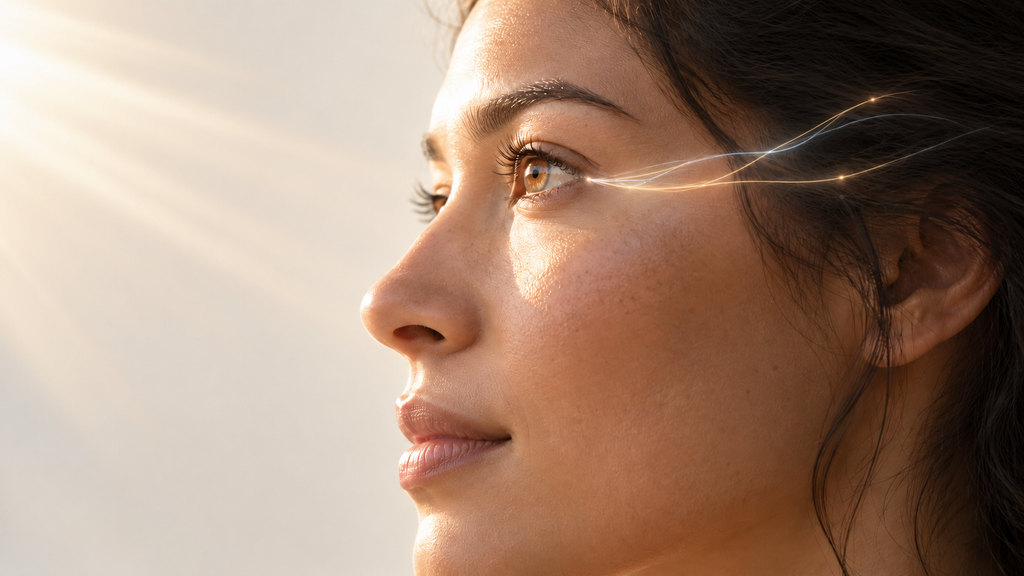
Your eyes are also part of a sophisticated communication system between light, the brain and the rest of the body. The light entering your eyes helps regulate your internal body clock, influencing when you feel alert, when you become tired and how your sleep-wake cycle is timed.
Stanford Professor of Neurobiology and Ophthalmology Andrew Huberman has spoken extensively about this fascinating connection. His work has helped bring public attention to a part of eye science many people never hear about: some cells in the retina respond to light not primarily to create an image, but to send information about the surrounding light environment to the brain.
Your eyes do more than create pictures.
The retina is the light-sensitive tissue at the back of the eye. Rods and cones allow us to detect light, colour, movement and detail, creating the visual information we use to navigate the world.
The retina also contains specialised cells known as intrinsically photosensitive retinal ganglion cells, or ipRGCs. These cells contain a light-sensitive pigment called melanopsin. They receive information from light and communicate with areas of the brain involved in non-visual functions, including the regulation of circadian rhythms.
In simple terms, they help the brain answer an important question: is it daytime or nighttime?
That signal helps synchronise the body's approximately 24-hour internal clock with the outside world. Scientific reviews describe these retinal pathways as important mediators of light's effects on circadian timing, sleep, alertness and mood.
Why the timing of light matters.
Light is one of the strongest environmental cues for the circadian system. Exposure to light early in the day helps signal that the active part of the day has begun. Bright light late at night can send a conflicting message, potentially delaying the body's natural preparation for sleep.
This does not mean that one morning outside will instantly solve poor sleep, or that all light affects every person in exactly the same way. Sleep is influenced by many factors, including routine, health, stress, medication and the sleeping environment. However, a consistent pattern of brighter days and darker evenings supports the timing signals our biology expects.
One useful habit is remarkably simple: spend some time outdoors after waking, where daylight is generally much brighter than ordinary indoor lighting. Later in the evening, reducing unnecessarily bright light can help reinforce the contrast between day and night.
You should never stare directly at the sun or look at any light that causes discomfort or pain. Normal outdoor daylight is the point, not forcing intense light into the eyes.
What about screens and blue light?
This is where the conversation often becomes oversimplified.
Blue wavelengths are a normal part of daylight and can influence the circadian system. However, the effect of light depends on more than colour alone. Timing, brightness, duration and a person's overall light environment all play a role.
For people who spend a significant amount of time using computers, tablets, phones or other digital technology, blue-light-managing lenses can be a worthwhile option. These lenses selectively reduce a portion of blue-violet light and may provide a more comfortable visual experience, particularly for those moving between screens and bright indoor environments throughout the day. The right recommendation should be based on the individual, their prescription, their working environment and how they use technology both at work and at home.
Blue-light lenses are not a complete solution on their own. Digital discomfort can also be influenced by prolonged near focus, reduced blinking, dry eyes, glare, posture and an uncorrected or outdated prescription. The best approach may combine appropriately selected lenses with regular visual breaks, comfortable lighting, conscious blinking and an accurate prescription.
Eye health is connected to whole-body health.
The light-eye-brain connection is a reminder that the eyes are not isolated cameras. They are living neural tissue and an extension of the brain, continuously gathering information that influences both what we see and how the body responds to the environment.
It is also why a comprehensive eye examination should look beyond whether you can read the smallest letters on a chart. Clear sight is important, but so is the health of the retina, optic nerve and other structures that make vision possible.
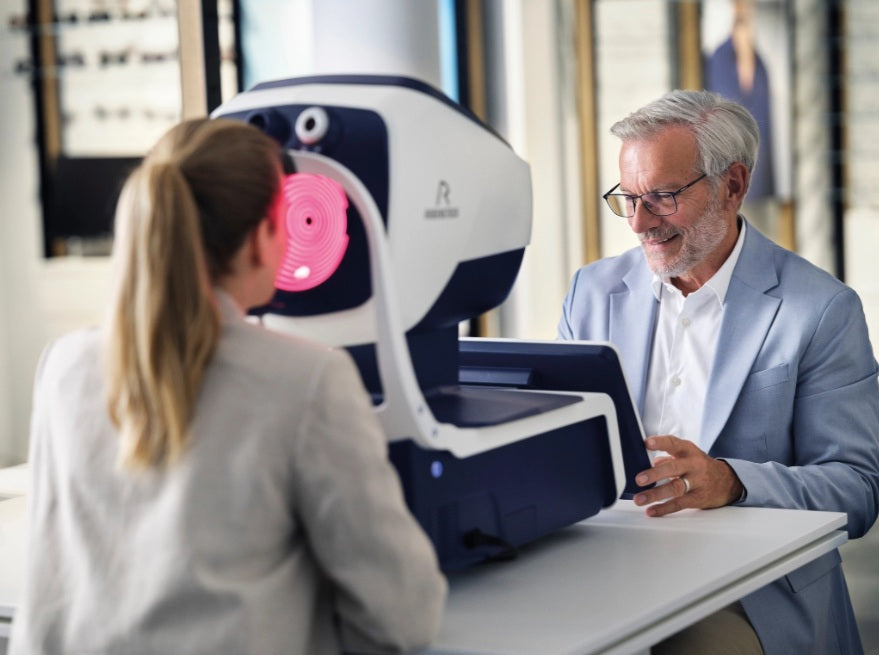
At Spex Design Optometrist, our comprehensive eye examinations include OCT imaging, which provides detailed cross-sectional images of the retina and optic nerve, as well as a biometric scan that captures highly detailed measurements of the eye. Our experienced optometrists carefully interpret this advanced diagnostic information alongside your ocular health, prescription, visual demands and lifestyle. This gives us a comprehensive understanding of your eyes and your visual system.
Your eyes don't just show you the world. They help tell your body what time it is.
That is a surprising second job, and another reason your eye health deserves a closer look.
If you would like a more complete picture of your eye health and visual system, book a comprehensive eye examination with Spex Design Optometrist in North Perth.
Frequently asked questions
How does light entering the eyes affect sleep?
Light detected by the retina sends signals to areas of the brain involved in regulating the circadian rhythm. Brighter light earlier in the day helps reinforce daytime alertness, while excessive bright light late in the evening can delay the body's natural preparation for sleep.
What is the connection between the eyes and the brain?
The retina is neural tissue that converts light into electrical signals. Some of those signals create the images we see, while others provide the brain with information about the surrounding light environment, helping regulate functions such as circadian timing and alertness.
Can blue-light lenses help people who use screens all day?
Blue-light-managing lenses can be a worthwhile option for people who spend significant time using computers, tablets, phones, and other digital devices. The most appropriate lens depends on the person's prescription, visual demands, working environment and technology use. Blue-light management should form part of a broader approach that may also include regular breaks, comfortable lighting, blinking and an accurate prescription.
What is included in a comprehensive eye examination at Spex Design Optometrist?
Our comprehensive eye examinations include a detailed biometric scan using the Rodenstock DNEye® Scanner 3, the newest generation of Rodenstock’s biometric scanning technology and the first of its kind in Australia. We also use the NIDEK OCT to capture detailed cross-sectional images of the retina and optic nerve. Our experienced optometrists carefully interpret this advanced diagnostic information alongside your prescription, eye health, visual needs and lifestyle, giving us a comprehensive understanding of your eyes and your visual system.
Sources and further reading
- Huberman Lab: Using Light for Health
- Huberman Lab: Using Light to Optimize Health
- Effects of light on human circadian rhythms, sleep and mood
- Light as a central modulator of circadian rhythms, sleep and affect
- Cochrane review: Blue-light filtering spectacle lenses
This article provides general information and is not a substitute for personalised medical or eye-care advice.
Related post
11
Aug

20
May
RECENT POSTS
11.August.2026
Australia’s First Rodenstock DNEye® Scanner 3 Arrives at Spex Design Optometrist
0 Comments
20.May.2026
Why Outdoor Time May Be One of the Most Powerful Tools in Preventing Childhood Myopia.
0 Comments