
Australia’s First Rodenstock DNEye® Scanner 3 Arrives at Spex Design Optometrist
A new generation of biometric precision has arrived in Perth.
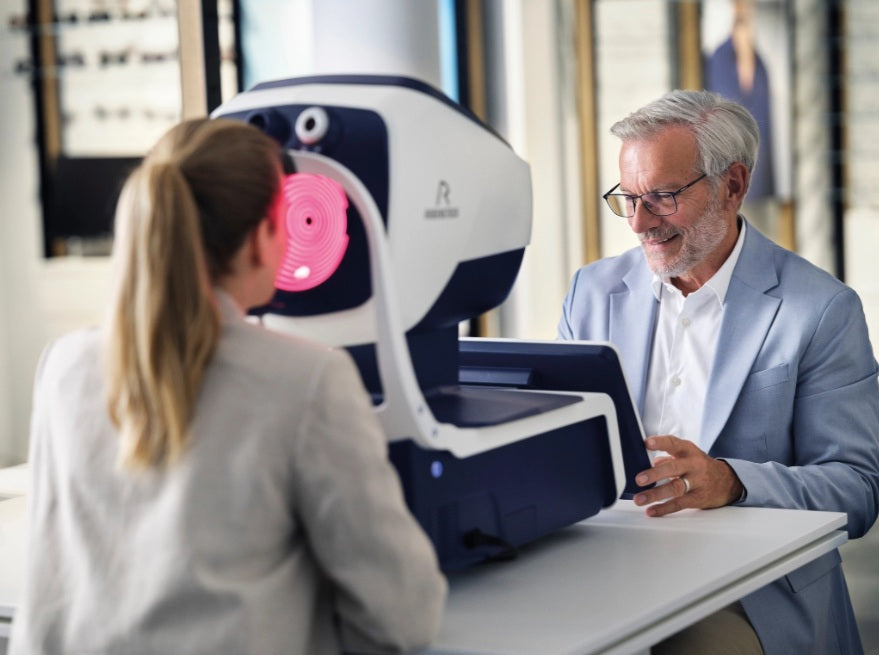
We are incredibly proud to introduce the Rodenstock DNEye® Scanner 3 to our North Perth practice, the first DNEye Scanner 3 in Australia.
For more than six years, biometric eye measurement has been an important part of the way we approach vision at Spex Design. The arrival of the third-generation DNEye Scanner represents another significant step forward.
It allows us to look beyond a conventional spectacle prescription and capture a far more detailed biometric picture of each individual eye.
Your eyes are as individual as your fingerprint.
A traditional prescription tells us important information about your vision, including whether you are short-sighted, long-sighted or have astigmatism.
But there is considerably more to the eye than those prescription numbers alone.
Rodenstock's approach to lens design begins with a simple principle: every eye is different.
The DNEye Scanner measures the eye using more than 7,000 biometric data points, capturing information that can be incorporated into the calculation of individualised Rodenstock lenses.
This is the foundation of Rodenstock's B.I.G. VISION® philosophy, Biometric Intelligent Glasses designed around the individual characteristics of the wearer rather than relying solely on a standardised model of the eye.
What does the DNEye® Scanner 3 measure?
The DNEye Scanner 3 combines several sophisticated measurements within one platform.
Depending on the examination being performed, these include aerometry, corneal topography, pupillometry and pachymetry, alongside expanded screening capabilities including fundus photography, tear-film analysis and high-resolution imaging of the anterior eye.
It can also assess how the optical characteristics of the eye change under different lighting conditions. Rodenstock specifically notes that DNEye technology can record pupil response during day and night conditions and detect individual optical aberrations associated with issues such as reduced contrast sensitivity and poorer vision at twilight. The result is a much more comprehensive understanding of the individual eye.
From biometric measurement to your spectacle lenses.
This is where the technology becomes particularly interesting.
The DNEye Scanner isn't simply about collecting more measurements.
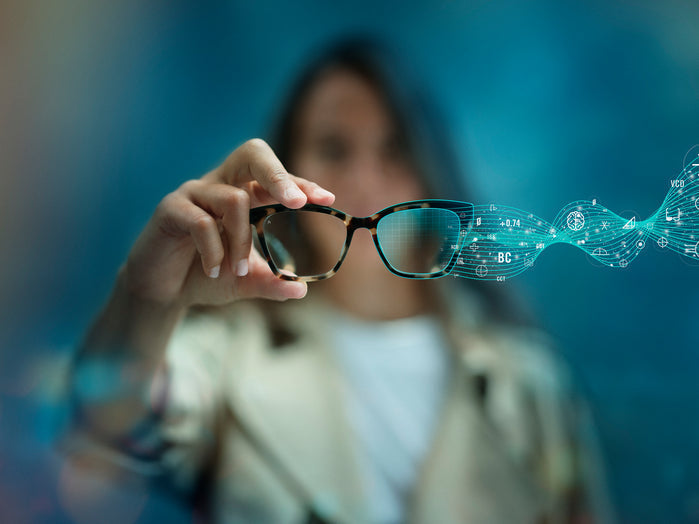
For compatible Rodenstock biometric lenses, relevant DNEye measurement data can be incorporated into the actual calculation and manufacture of the spectacle lenses.
Instead of designing a lens primarily around a standardised theoretical eye, Rodenstock can use individual biometric information to create a lens tailored much more specifically to the person wearing it.
Rodenstock describes the potential benefits of DNEye-optimised lenses as improved contrast, better vision in low-light conditions, larger fields of vision and a more natural visual experience.
The next generation: DNEye® Scanner 3.
We have worked with previous generations of DNEye technology for years, so moving to Scanner 3 isn't about changing our philosophy.
It's about taking it further.
The third generation introduces expanded measurement and screening capabilities, including fundus photography, tear-film assessment and multislit pachymetry, which provides corneal-thickness information across multiple locations rather than only a single section.
For our optometrists, it provides another sophisticated source of information alongside the clinical examination and other diagnostic technology within our practice.
For our dispensing team, it allows us to continue pursuing what has always interested us most about biometric lenses: creating eyewear around the individual, rather than the average.
More than technology.
Being the first practice in Australia to introduce the DNEye Scanner 3 is something we are extremely proud of.
But for us, this isn't really about being first.
It's about what the technology allows us to do for the person sitting in front of us.
Spex Design has always believed that exceptional eyewear requires more than choosing a beautiful frame. The examination, the measurements, the lens design, the positioning of those lenses within the frame and the final fitting all matter.
The DNEye Scanner 3 gives us another level of biometric information to bring into that process.
Because your eyes aren't standard.
Your lenses shouldn't have to be either.
Experience biometric vision at Spex Design.
The Rodenstock DNEye® Scanner 3 is now available at Spex Design Optometrist in North Perth.
Related post
11
Aug

20
May
RECENT POSTS

11.August.2026
Australia’s First Rodenstock DNEye® Scanner 3 Arrives at Spex Design Optometrist
0 Comments
20.May.2026
Why Outdoor Time May Be One of the Most Powerful Tools in Preventing Childhood Myopia.
0 Comments